Sound Machine Buying Guide
How to Choose the Best Sound Machine for Sleeping
An evergreen buyer's guide to sound quality, playback, controls, power, and the features that matter in your bedroom.
A good night's sleep can be difficult when your bedroom isn't as quiet as you'd like. Traffic outside, noisy neighbors, barking dogs, household sounds, and other interruptions can make it harder to relax and stay asleep.
A sound machine can help create a more consistent auditory environment by providing steady background noise. Instead of trying to eliminate every external sound, it produces a continuous sound that may make sudden noises less noticeable.
However, not all sound machines are created equal. Some offer realistic mechanical airflow, while others use digital recordings or synthesized sounds. Some provide only a few basic settings, while others include numerous sound options, adjustable timers, rechargeable batteries, and smartphone controls.
The best sound machine isn't necessarily the most expensive or the one with the most features. It is the device that produces comfortable sound, operates reliably, and fits naturally into your bedtime routine.
1. Sound Quality: The Most Important Feature
Sound quality should be one of your first considerations. You may listen to the device for several hours every night, and a sound that seems acceptable during a short demonstration might become irritating after extended listening.
Natural and comfortable sound
Some machines produce smooth, consistent background noise, while others sound artificial or overly processed. If you're considering a device that simulates rain, ocean waves, wind, or a fan, listen for unnatural repetition, abrupt transitions, or digital artifacts. A convincing sound should feel continuous and comfortable rather than like a short recording being played repeatedly.
Consistent volume
The sound should remain stable throughout playback. Unexpected changes in volume can be distracting, particularly when you're trying to fall asleep. Some inexpensive devices have limited volume settings, making it difficult to find a comfortable listening level.
Frequency balance: white, pink, and brown noise
Different types of sound have different frequency characteristics. White noise is relatively bright and static-like, pink noise is often perceived as softer, and brown noise has a stronger emphasis on lower frequencies. There is no universally best noise color for sleep; personal preference and the surrounding environment matter more than marketing claims.
If you're unfamiliar with these sounds, see our guide to white, pink, and brown noise.
Speaker quality
A small speaker doesn't necessarily produce poor sound, but its limitations may become noticeable at higher volumes or when reproducing low frequencies. Listen for distortion, buzzing or rattling from the enclosure, unpleasant high-frequency hiss, weak or distorted bass, and electronic interference. A sound machine should produce comfortable background sound without requiring excessive volume.
2. Sound Looping: Avoid Repetitive Recordings
Many digital sound machines use recordings of rain, waterfalls, wind, or other environmental sounds. Because each recording has a limited duration, it eventually repeats. If it is short, you may notice the same sequence returning every few minutes; a repeated change in rainfall or a quiet section can become distracting when you're trying to fall asleep.
Ideally, choose a device that offers:
- Long recordings with minimal repetition.
- Seamless transitions between playback cycles.
- No audible clicks or gaps when a loop restarts.
- Consistent sound levels throughout the recording.
Some digital machines use synthesized sounds rather than conventional recordings and may avoid repeating a short audio sample. Mechanical sound machines generate sound through physical airflow or moving components, so they generally don't rely on prerecorded loops. They have their own characteristic sound patterns and may offer less variety.
3. Volume Control: More Important Than You Might Think
A sound machine should let you adjust the volume to suit your bedroom and preferences. A device that is too quiet may not provide enough background sound to make external noises less noticeable; one that is too loud may become distracting or unnecessarily increase sound exposure.
Look for gradual volume adjustment
The ideal volume depends on bedroom size, distance between the machine and your bed, background noise, speaker characteristics, and personal sensitivity to sound. More precise adjustment helps you find a comfortable level instead of choosing between too quiet and too loud.
Avoid unnecessary volume
The goal isn't to drown out every sound in your environment. Start with a low setting and increase it only until the background sound becomes comfortable. If you need to turn the machine up considerably to mask disruptive noise, consider addressing the source rather than relying entirely on louder playback.
4. Timer or Continuous Playback?
Some people want background noise only while falling asleep; others prefer continuous sound throughout the night. A useful machine makes it easy to choose.
Automatic sleep timer
A timer allows the device to stop playing after a predefined period. Common settings include 15, 30, 60, or 90 minutes, as well as several hours. It may be useful if you only want sound while settling down.
Continuous playback
Continuous playback keeps the background sound steady if your environment contains unpredictable noises throughout the night. Neither a timer nor all-night playback is universally superior. A timer may reduce operating time and battery use, while continuous playback avoids exposing later noises when the sound stops. If you're unsure, choose a device that supports both and test how you respond.
5. Power Options: AC Adapter, USB, or Rechargeable Battery?
The power source affects convenience. Consider where you intend to use the sound machine and whether you want it to remain connected to an outlet.
AC-powered sound machines
AC-powered models provide reliable power for continuous overnight use without recharging, which can suit permanent bedside placement. They require an outlet, may be less convenient for travel, and can be hard to position if the cable is short.
USB-powered sound machines
USB power can make adapter choice and travel easier, and some devices can run from a power bank. Check whether an adapter is included and whether the model has a built-in battery; USB power alone does not mean the machine works unplugged.
Rechargeable sound machines
A built-in battery allows use away from a wall outlet and makes it easier to move the machine between rooms. It also needs periodic charging, battery capacity may decline over time, and some models have shorter runtimes at higher volumes. A wired-and-battery option can offer flexibility if you need both.
6. Portability: Will You Use It Outside Your Bedroom?
If you travel frequently, consider overall size and weight, battery capacity, charging method, durability, ease of operation, and whether the device can run while charging. Compact machines can be useful in hotels, guest rooms, and unfamiliar environments, but a smaller speaker may not reproduce sound or low frequencies like a larger bedside model. Check the actual sound at a comfortable level rather than assuming portability guarantees the same experience.
7. Mechanical vs. Digital Sound Machines
Both mechanical and digital machines can provide continuous background sound, but they produce it differently.
Mechanical sound machines
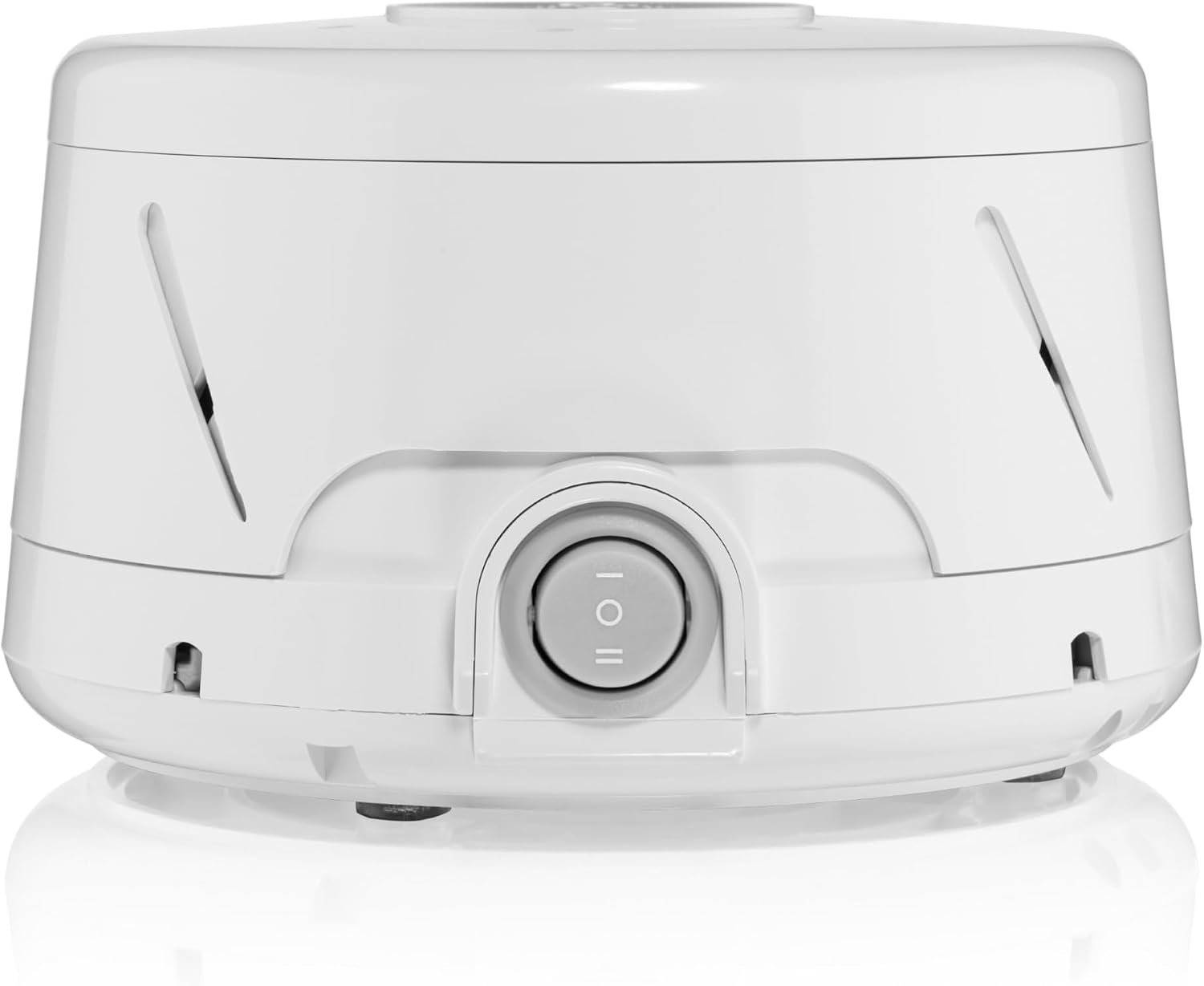
Mechanical devices generate sound through physical components, often using a small fan or airflow mechanism. The Yogasleep Dohm Classic is a familiar example.
- Advantages: continuous physical sound rather than a recording; no conventional audio loop; simple operation; distinctive fan-like sound.
- Trade-offs: limited sound variety and adjustment; some models need regular cleaning; moving parts can wear or develop mechanical noise.
A mechanical model may appeal if you want a simple, consistent fan-like sound without prerecorded loops.
Digital sound machines
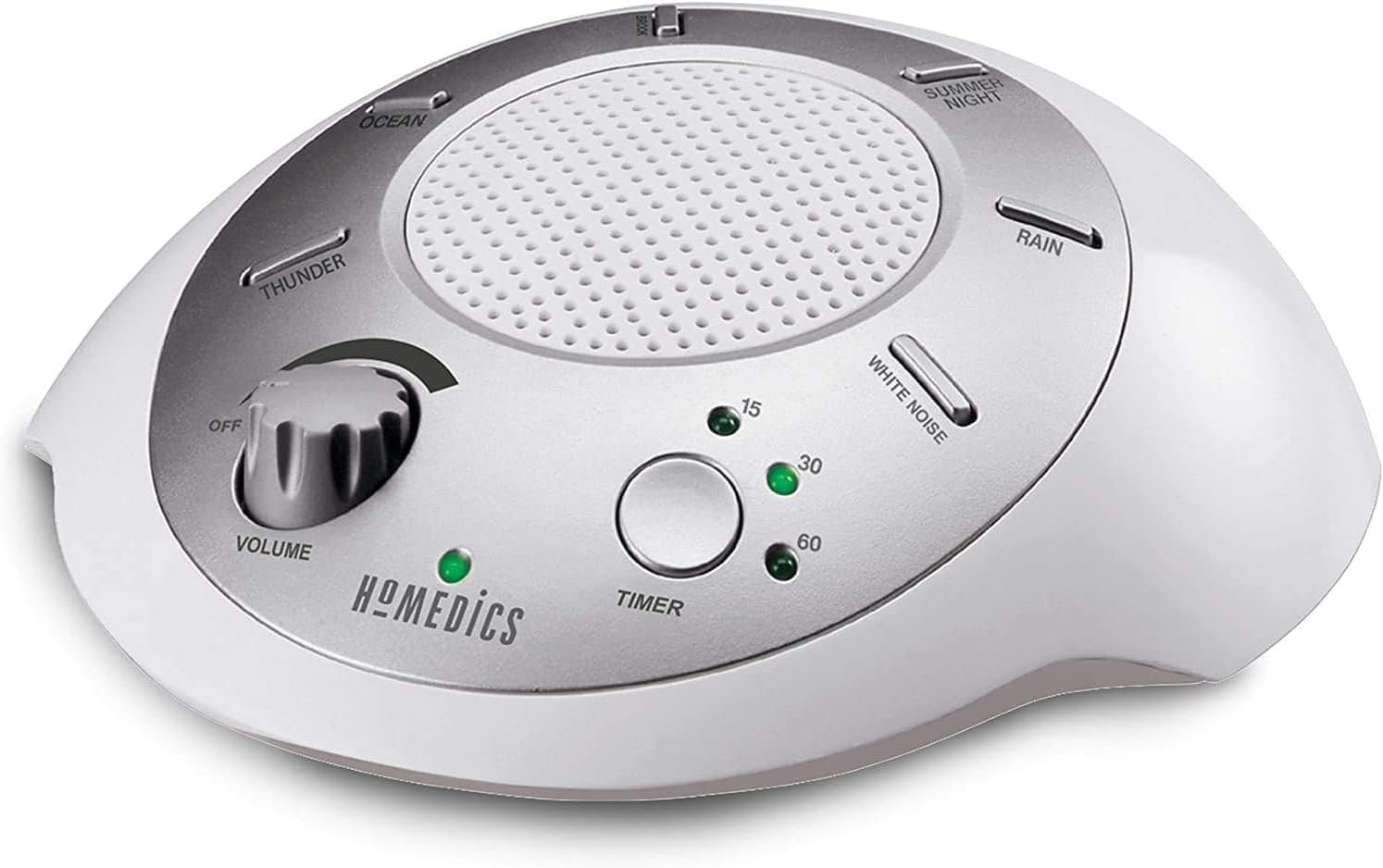
Digital devices use recordings or electronically generated sounds. They may offer white, pink, brown, rain, ocean waves, wind, fan, and other options.
- Advantages: greater sound variety; often include timers and multiple volume settings; some have rechargeable batteries; no moving fan mechanism is needed to generate sound.
- Trade-offs: short recordings may loop; speaker quality varies; electronic components can fail; some models add unnecessary controls or features.
A digital model may be more suitable if you want flexibility and multiple sound choices. Neither technology is inherently better; choose based on sound preference and the features you will actually use. Read our detailed comparison of digital and mechanical sound machines.
8. Ease of Use: Don't Overcomplicate Your Bedtime Routine
A sound machine should be easy to operate, especially when you're already in bed. Useful features include physical power and volume buttons, clearly identifiable controls, a display that dims or switches off, memory for preferred settings, simple timer controls, and a remote if you need one.
Smartphone applications can add customization, but they aren't essential for everyone. A device with a simple power button, volume control, and a few reliable sounds may be more practical than one that requires an app for everyday use. Check for bright indicator lights that could be distracting in a dark bedroom.
9. Additional Features: Which Ones Are Worth Paying For?
Manufacturers often advertise extra features. Some are useful; others add cost without improving the basic experience.
| Feature | Is it useful? | Why it matters |
|---|---|---|
| Multiple noise colors | Yes | Allows you to experiment with different sounds. |
| Adjustable volume | Essential | Helps you find a comfortable listening level. |
| Sleep timer | Useful | Allows automatic shutoff. |
| Rechargeable battery | Depends | Convenient for travel and flexible placement. |
| Headphone output | Depends | Useful for some listening setups. |
| Smartphone app | Optional | Adds remote control and customization. |
| Dimmable display | Useful | Reduces unwanted bedroom light. |
| Memory function | Useful | Restores preferred settings. |
| Multiple alarms | Optional | Not essential for sound masking. |
Don't pay extra for features you won't use. A reliable speaker, comfortable sound, and convenient controls are generally more important than an impressive list of specifications.
10. How Much Should You Spend on a Sound Machine?
Sound machines range from basic models with a few sounds and simple controls to more expensive devices with improved speakers, more options, rechargeable batteries, apps, and additional functions. A higher price does not automatically guarantee better sound or a better sleeping experience.
When comparing prices, consider build quality, speaker performance, sound variety, playback reliability, warranty and customer support, power and battery options, and ease of use. A basic mechanical device may be sufficient if you enjoy its sound; an inexpensive digital machine may meet your needs if playback is smooth and volume control is adequate. The best purchase meets your requirements without making you pay for unnecessary extras.
Sound Machine Buying Checklist
Before buying, use this checklist to compare different models:
- Does the sound quality feel comfortable?
- Is playback continuous without noticeable interruptions?
- Are there enough volume adjustment options?
- Does it offer the sounds you actually want?
- Can you choose between timed and continuous playback?
- Is the power source suitable for your bedroom?
- Is it portable enough if you plan to travel?
- Are the controls simple to operate?
- Can you dim or turn off unnecessary lights?
- Does the price justify its build quality and features?
- Is there a reasonable warranty?
Compare Sound Machine Recommendations
Once you know which features matter, compare current sound-machine recommendations and weigh each option's trade-offs rather than relying on a bestseller label.
Best White Noise Machines for Sleep
Frequently Asked Questions
What is the best type of sound machine for sleeping?
There is no single best type for everyone. Mechanical machines suit people who prefer a continuous fan-like sound, while digital machines offer more variety and customization. Personal listening preference is important.
Are mechanical sound machines better than digital ones?
Not necessarily. Mechanical devices generate sound through physical airflow or moving components, while digital devices use recordings or electronic sound generation. Mechanical machines generally offer fewer sounds; digital machines provide greater flexibility. Each approach has advantages and limitations.
Should a sound machine run all night?
It depends on your preferences and environment. Some people prefer a timer, while others find continuous playback more convenient. If you use a sound machine throughout the night, keep the volume comfortable and low.
How loud should a sound machine be?
Start with the lowest volume that provides a comfortable background sound. You generally don't need to overpower every external noise. Keep the speaker away from your head and avoid unnecessarily high volume levels.
Is a sound machine better than a smartphone app?
A dedicated sound machine can be more convenient because it doesn't require keeping your smartphone beside your bed. Apps offer flexibility and may be a useful way to try different sounds before buying a dedicated device.
Do expensive sound machines work better?
Not automatically. Higher-priced models may offer improved speakers, more sounds, or better construction, but those features do not guarantee better sleep. Consider whether they solve a real problem for you.
A Practical Choice, Not a Perfect Machine
Choose a sound machine by how it sounds in your room, whether the controls and playback fit your routine, and whether it makes the disturbance less noticeable without becoming distracting. Keep the volume low, make sure safety alerts remain audible, and use a return period to try it before committing. You can update product recommendations as models change without changing this evergreen buying checklist.
Recommended Products
Relevant picks from our current product catalog. Compare features and suitability before buying.
We may earn a commission from qualifying purchases at no extra cost to you. Prices and availability may change on Amazon.
Frequently Asked Questions
Sources & further reading
These authoritative resources informed the health guidance in this article.
About this guide
About the author
Alfredo Kofman is the independent publisher and editor of SleepSolutions.com. He organizes each guide around authoritative sources, clear safety boundaries, and transparent product disclosures. He is not a physician or sleep specialist, and this guide has not been presented as clinician-reviewed.
Disclaimer: This content is for informational purposes only and is not medical advice. Always consult a qualified healthcare professional for diagnosis and treatment.